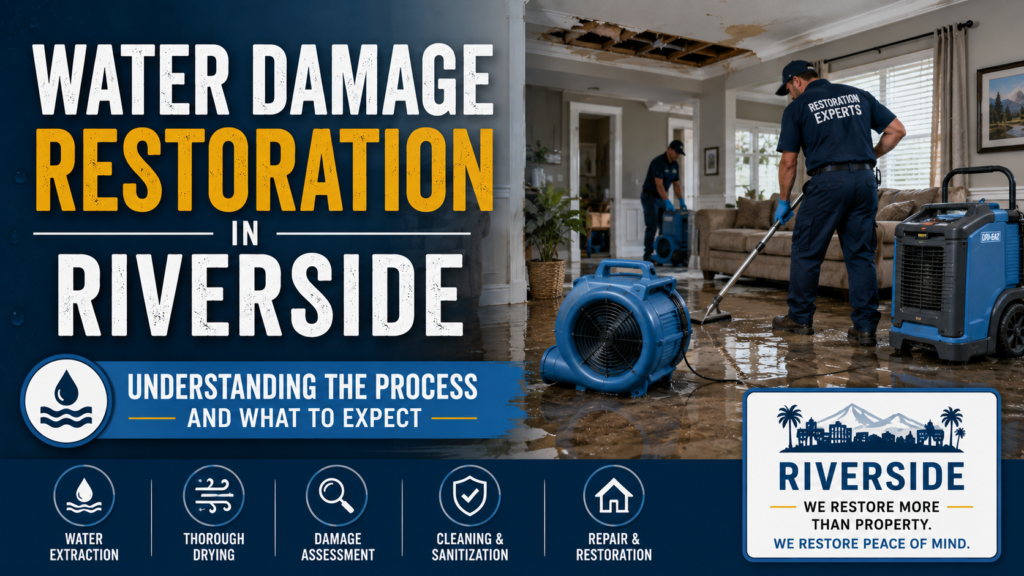
Water damage is one of the most prevalent and potentially destructive problems that homeowners and property managers in Riverside, California can face. Whether triggered by a burst pipe during a cold snap, a roof leak during the rainy season, an appliance malfunction, or flooding from an overflowing drainage system, water intrusion can escalate from a minor inconvenience to a major structural and health concern within just hours or days.
Water Damage Restoration Riverside is the process of returning a property to its original, pre-damage condition after water intrusion. Far more involved than simply mopping up visible water, it is a multi-stage professional process that requires specialized equipment, technical knowledge, and careful execution. For Riverside residents navigating the aftermath of a water-related event, understanding this process can make the difference between a successful, thorough recovery and one that leaves behind hidden moisture, structural weakness, or mold.
Why Water Damage Requires Prompt Attention
The urgency of water damage restoration cannot be overstated. Water moves rapidly through porous materials such as drywall, wood, insulation, and carpet, spreading far beyond the initially visible wet area. Within 24 to 48 hours of a water intrusion event, conditions become favorable for mold growth an additional complication that significantly increases the scope and complexity of the restoration process.
Prolonged moisture exposure also weakens structural components. Wood framing can warp, swell, and rot. Drywall becomes soft and crumbles. Metal fixtures and fasteners corrode. The longer water damage goes unaddressed, the more extensive and expensive the remediation becomes.
In Riverside’s warm, semi-arid climate, evaporation can mask the true extent of water damage. Surfaces may appear to dry quickly, while underlying materials retain significant moisture that continues to cause damage out of sight.
Categories of Water Damage
Not all water damage is the same. The restoration industry uses a classification system to describe the level of contamination in the water involved, which directly affects the approach and safety protocols used during cleanup.
Category 1 Clean Water: This involves water from a sanitary source, such as a broken supply line or overflowing sink. While it still requires prompt attention, Category 1 damage poses the least immediate health risk.
Category 2 Gray Water: This refers to water that contains some degree of chemical or biological contamination, such as discharge from washing machines, dishwashers, or toilet overflow (without solid waste). Gray water can cause illness if ingested and requires more thorough sanitization.
Category 3 Black Water: The most hazardous category, black water contains pathogenic, toxigenic, or other harmful agents. It includes sewage backups, floodwater from rivers or streams, and water that has been standing long enough to support significant bacterial growth. Restoration of Category 3 damage requires extensive protective measures and specialized disinfection protocols.
Understanding which category of water is involved helps restoration professionals determine the scope of work, the appropriate safety measures, and whether structural components need to be removed rather than simply dried.
Classes of Water Damage
In addition to water category, the IICRC (Institute of Inspection, Cleaning and Restoration Certification) identifies four classes of water damage based on the volume of water and the rate of evaporation from affected materials.
Class 1 involves minimal water in a small area with materials having low porosity, such as tile or sealed concrete. Class 2 affects a larger area with porous materials like carpet and drywall significantly involved. Class 3 represents saturation across a wide area, often the result of water entering from overhead. Class 4 involves specialty drying situations where materials such as hardwood, concrete, or plaster have been deeply saturated and require extended drying techniques.
Correctly classifying the damage allows technicians to select the right equipment, set appropriate drying goals, and establish a realistic timeline for restoration.
The Water Damage Restoration Process
Water damage restoration follows a structured sequence of steps. While every property and event is unique, the general process remains consistent.
Step 1 Emergency Response and Inspection: Upon arrival, restoration professionals conduct a thorough assessment of the property. They identify the source of water intrusion and take immediate steps to stop it whether that means shutting off the main water supply, tarping a damaged roof, or isolating a burst pipe. Using moisture meters, thermal imaging cameras, and hygrometers, they map the full extent of water migration, including hidden moisture in wall cavities, beneath flooring, and behind cabinetry.
Step 2 Water Extraction: With the damage assessed, the next priority is removing as much standing water as possible. Industrial pumps, high-capacity wet vacuums, and submersible extraction units pull water from floors, carpets, and other surfaces. The more water that is extracted at this stage, the faster and more effective the drying process will be.
Step 3 Damaged Material Removal: Materials that are too saturated to be dried effectively such as soaked carpet padding, waterlogged drywall, or compromised insulation are removed from the property. This step accelerates drying and prevents trapped moisture from becoming a breeding ground for mold. Careful documentation of removed materials is important for insurance purposes.
Step 4 Drying and Dehumidification: This is one of the most critical phases of water damage restoration. Even after visible water has been removed, moisture remains embedded in structural materials and the surrounding air. Restoration technicians deploy industrial air movers, low-grain refrigerant (LGR) dehumidifiers, and air scrubbers to aggressively remove residual moisture. Drying equipment is typically monitored daily, with moisture readings recorded to track progress. Depending on the severity of the damage, this phase can take anywhere from 24 hours to several days.
Step 5 Cleaning and Sanitization: Once drying is complete, all affected surfaces are cleaned and sanitized. Water damage often introduces bacteria, mold spores, and other contaminants. Professional-grade antimicrobial treatments are applied to prevent microbial growth. Odor removal using thermal fogging, ozone generation, or hydroxyl technology is also performed at this stage.
Step 6 Reconstruction and Restoration: The final phase involves repairing and rebuilding what was removed or damaged. This can range from replacing a section of drywall and repainting a wall to more extensive reconstruction involving flooring, insulation, cabinetry, and structural framing. The goal is to return the property to its pre-loss condition or better.
Hidden Water Damage: The Risks You Cannot See
One of the greatest challenges in water damage restoration is the presence of moisture in places that are not immediately visible. Water travels along the path of least resistance, seeping into wall cavities through electrical outlets, penetrating beneath hardwood floors, and saturating insulation within ceiling assemblies.
Thermal imaging cameras are invaluable tools for detecting this hidden moisture. By identifying temperature differentials between wet and dry materials, they allow technicians to locate moisture accumulation that would otherwise go undetected and untreated.
In Riverside, where some residential properties include older construction with materials like plaster walls and wood lathe, hidden moisture can be an especially significant concern. Homes with basements or crawl spaces are also more vulnerable to prolonged moisture retention that can compromise structural integrity over time.
Mold Prevention During Water Damage Restoration
The relationship between water damage and mold growth is well established. Mold spores naturally present in the environment begin colonizing wet porous materials within 24 to 48 hours under the right temperature and humidity conditions. Riverside’s generally warm climate provides near-ideal conditions for mold proliferation in the aftermath of a water intrusion event.
Effective water damage restoration fundamentally includes mold prevention. Rapid water extraction, thorough drying, and prompt sanitization are the primary defenses against mold taking hold. When drying is delayed or incomplete, mold remediation becomes an additional, costly, and disruptive process that should have been preventable.
Property owners who notice a musty odor, visible discoloration, or health symptoms following a water event should seek professional inspection promptly, even if the visible signs of water damage appear to have resolved.
The Importance of Professional Restoration
While minor water spills can often be addressed by homeowners with towels and fans, significant water intrusion events require professional intervention. The equipment and expertise required for effective water damage restoration industrial-grade dehumidifiers, moisture mapping technology, antimicrobial treatments, and structural repair capabilities are beyond what consumer-grade tools can provide.
Attempting to restore severe water damage without professional help often results in inadequate drying, residual moisture, mold growth, and structural problems that become apparent weeks or months later. Professional restoration ensures that the job is done thoroughly, documented appropriately, and completed in a way that supports insurance claims.
For Riverside property owners, water damage restoration is not just about fixing what is visible. It is about protecting the structural integrity of the home, preserving indoor air quality, and ensuring that the property is safe for its occupants long after the visible signs of damage have been addressed.