Most people treat dog waste as a nuisance. Public health researchers treat it as a pathogen delivery system. The difference between those two views comes down to disposal, and disposal starts with containment: Heavy duty trash bags built to seal waste completely are the unglamorous hero of neighborhood health, standing between a pile on the sidewalk and the bacteria it carries into water, soil, and small hands.
America’s roughly 90 million dogs generate an estimated 10 million tons of feces annually, and a surprising share never gets picked up at all. This piece walks through what is actually inside that waste, how it travels, and the six containment rules that keep your household from being part of the problem in 2026.
What Lives Inside Dog Waste?
A single gram of dog feces can contain 23 million fecal coliform bacteria. Beyond bacteria, the parasite load is the bigger human concern: roundworm, hookworm, and whipworm eggs shed in feces remain viable in soil for months to years after the visible waste disappears.
The CDC’s healthy pets guidance documents how these organisms transmit to humans, with children facing the highest risk because they play at ground level and touch their faces constantly. Toxocariasis, the infection caused by roundworm larvae, can damage eyes and organs, and cases are diagnosed in every US state.
The waterway pathway
Rainfall is the transport network. Waste left on lawns and trails dissolves into runoff, enters storm drains untreated, and arrives in rivers carrying its full bacterial cargo. Several US beach closures every summer trace back partly to pet waste in urban watersheds.
Why Do Heavy Duty Trash Bags Matter for Pet Waste?
Thin bags fail in three specific ways: punctures from ground debris, seam splits under weight, and pinhole leaks you never see. Each failure releases exactly what containment was supposed to stop, often inside your own kitchen can or against your leg on a walk.
Purpose-made thick liners solve the mechanical problem. Look for these specifications when comparing options:
- Thickness of 1 mil or greater, which resists twig and gravel punctures.
- Bottom seals rated for wet, heavy loads rather than dry paper trash.
- Opening wide enough to mount on a scooping tool without tearing.
- Opaque material, both for courtesy and for UV resistance in outdoor cans.
The Six Rules of Safe Disposal
Municipal guidance across the US converges on a consistent playbook. Communities that maintain shared spaces well, whether that is a homeowners association or the trusted professionals who manage large residential developments abroad, all enforce some version of these same rules because they work.
- Pick up immediately on walks and at least twice weekly at home.
- Double-bag any waste from a dog under treatment for parasites.
- Seal every bag with a knot, not a twist, before it leaves your hand.
- Send sealed waste to landfill trash unless your city explicitly accepts it in organics.
- Never add dog feces to backyard compost that touches food gardens.
- Wash hands or use sanitizer after every handling session, gloves or not.
Disposal Methods Ranked by Health Risk
| Method | Pathogen containment | Legal status (US) | Verdict |
|---|---|---|---|
| Sealed bag to trash | Excellent | Legal everywhere | Recommended default |
| In-ground digester | Good, if maintained | Legal in most areas | Solid yard option |
| Flushing (no bag) | Good | Varies; banned on septic in some states | Check local rules first |
| Home compost | Poor | Legal but risky | Avoid near food crops |
| Leaving it in place | None | Fined in most cities | Never acceptable |
Tools That Take Hands Out of the Equation
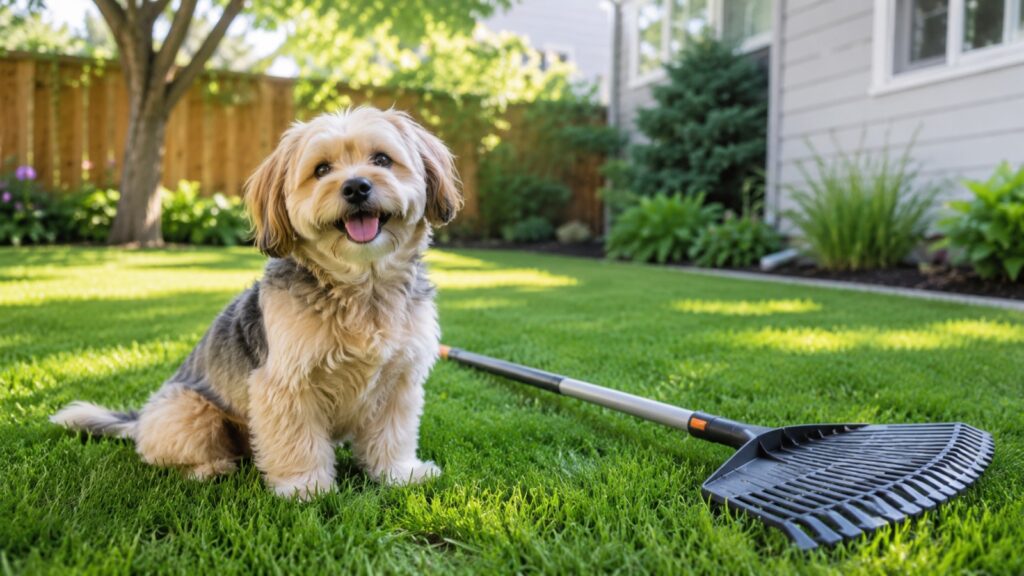
Every disposal chain has a weak link, and it is usually the moment skin gets close to waste. A long-handled Pooper scooper removes that moment entirely, lifting waste into a liner without a bend, a grab, or the thin-film glove maneuver everyone secretly hates.
Pair the tool with the liner
Containment works as a system. A sturdy scooper feeding a thick, well-sealed bag gives you two independent barriers between pathogens and people, which is the same redundancy logic hospitals use for sharps disposal.
Storage between trash days
Sealed bags still need a home for up to a week. A dedicated outdoor can with a gasketed lid, lined with one more thick liner, contains both odor and any bag failures. Position it away from doors, windows, and the neighbor’s fence line, and rinse it monthly.
What Cities Are Doing About It in 2026
Enforcement is tightening. Fines for unscooped waste now reach $250 in cities like Denver and $500 in parts of New York, and a handful of HOAs have made headlines running DNA registries that match stray piles to resident dogs. Meanwhile, more than a dozen municipalities have piloted pet-waste-to-biogas programs, turning collected waste into energy for park lighting.
The direction is clear: communities increasingly treat pet waste like the public health issue it is, and residents with good containment habits stay ahead of both fines and neighborhood friction.
Frequently Asked Questions
Is it safe to flush dog poop down the toilet?
Municipal sewage treatment handles dog waste fine, but never flush the bag, and skip flushing entirely if you are on a septic system, since canine waste carries grasses and hair that septic tanks process poorly. Cat waste is a separate matter and should never be flushed.
How long do parasites survive in soil after the poop is gone?
Roundworm eggs can stay infective for months and in some conditions years, surviving freezes that kill most bacteria. This persistence is exactly why prompt pickup beats any after-the-fact treatment.
Do biodegradable bags break down in landfills?
Mostly no. Landfills lack the oxygen and microbes that biodegradable films need, so bags marketed as compostable typically mummify alongside regular plastic. Choose bags for containment strength first and disposal claims second.
Can I get sick just walking past dog waste?
Casual proximity poses little risk. Transmission requires contact, usually hand to mouth after touching contaminated soil or surfaces, which is why playgrounds and sandboxes near unscooped areas concern health officials most.
Conclusion: Containment Is a Community Habit
Nobody scoops for fun. We scoop because sealed waste protects kids at the playground, swimmers at the lake, and every dog that sniffs the same patch of grass tomorrow. Stock up on genuinely heavy duty trash bags, keep a proper scooper by the door, and make your household one of the ones doing it right. Your neighborhood’s health data will quietly reflect it.